
Why ADHD Burnout Can Feel Sudden
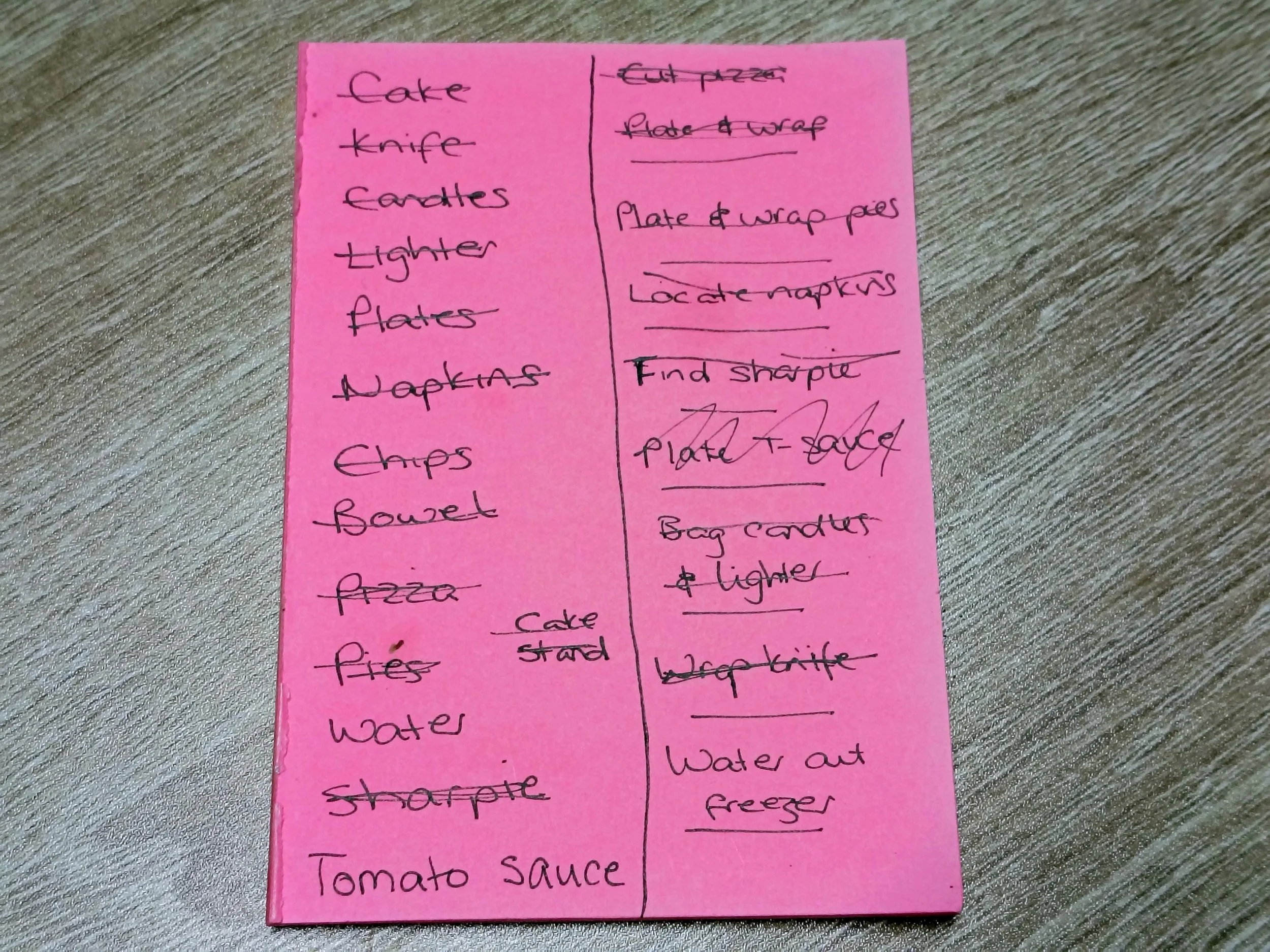
Bright pink handwritten to-do list broken into very small party-prep steps, illustrating hidden load and early warning signs of reduced capacity in ADHD.
Tidying up the kitchen today, I found yesterday’s bright pink to-do list and felt that familiar jolt of recognition.
Diagnosed with ADHD in my late thirties and raising four kids, to-do lists have been one of the ways I’ve held life together for years.
It wasn’t the pink paper, or the over-detailed breakdown, or even the fact I needed a list at all that caught me off guard.
It was what the list meant.
It was the invisible weight it was carrying, and the early warning sign I hadn’t recognised at the time.
Yesterday was my son’s birthday party. I’d strategically taken the “lazy” option and booked a party package at the local laser tag venue. All I had to do was bring snacks, a cake, and water.
It all went smoothly. Everyone had a great time.
But an hour after getting home, I’d crashed into bed, utterly depleted.
On the surface, the to-do list was ordinary. Just part of getting things done with an ADHD brain. A way to break one task into ten smaller ones, where someone else might have simply written “pack party food”. A tool to stay on track. A reminder not to forget anything.
But looking at that list today, I could see with hindsight that it was also an early sign my margin had already dropped.
On the surface, the party was easy. Store-bought food, plated up and transported to the venue. A couple of hours of supervising, a round of Happy Birthday, then cake.
But “easy” on the outside doesn’t always mean low-load on the inside.
It had actually started about three weeks earlier. The original venue I’d booked caught fire, which meant changing both the date and location. Invites were updated, parents contacted, and my son reassured. That alone added unbudgeted load.
Then, closer to the party, transport arrangements for some of the kids kept changing. More planning. More messages. More moving parts to hold in my head.
Two days before, I’d planned a quiet morning baking for the school fundraiser, but one of my children was home sick. Another layer of demand, dropped straight on top.
By the time I wrote that bright pink to-do list, the tasks on it only represented about thirty minutes of actual jobs. But the fact I’d needed to break them down so much was itself a clue. It showed how much unbudgeted load had already built up in the background.
On paper, everything was under control. In reality, I was already running on empty.
I got everything done.
But at what cost?
For neurodivergent people in particular, capacity is often misread. We assume that if we are producing, coping, or getting things done, it must therefore be sustainable.
We look at lists checked off, emails replied to, and timeframes met as proof that we’re coping. Proof that we can take on more. Proof that this time, if we just push a little harder, the crash won’t come.
But we miss what has been building behind the scenes: unbudgeted load, time pressure, social expectations, sensory struggles. All the things that don’t show up neatly on a list, but still draw from the same limited pool.
Which is why the earlier signals matter. The sooner we notice them, the sooner we have a chance to intervene before a full crash.
After a period of high capability, when you’ve been in the flow and getting things done, the signs of a drop can look sudden.
A foggier mind. Poor sleep. Procrastination creeping in. Irritability at one small extra demand. Less tolerance for noise than usual.
They can seem to appear out of nowhere, but often they’re the first visible signs that your margin has already been narrowing for a while.
Trying harder is not the answer. It’s often the thing making it worse.
Because at that point, the issue usually isn’t effort. It’s load.
And while most of us can’t just stop work, pause parenting, or disappear for two days to recover, we can sometimes reduce load in smaller ways.
Groceries delivered. Lights dimmed. An appointment cancelled. A social invitation politely declined.
In hindsight, the crash wasn’t the first sign.
The first sign was how much extra support I needed just to hold a relatively small task together.
That bright pink list wasn’t just organisation. It was information.
It was telling me my system had less margin available than usual, long before I ended up in bed.
And sometimes that’s the shift: not waiting until everything feels impossible, but learning to notice the quieter signs earlier.
If this feels familiar, my free Capacity Snapshot tool can help you notice the early signs before you hit the wall.
